5 products live · 85+ countries · now raising

We build a little
every day. Forever.

Antbuilder is a venture studio. We don't back companies — we create them, in-house. Ten ventures in motion and five already live in 85+ countries — eight of them launched on $23,000 of total capital, by one operator. That efficiency is the whole thesis.

antbuilder 10 ventures · 1 operator
LebenmasterRun your life HotcheckViral photo intelligence Tromen PeakSoftware for companies TechnietoTech help marketplace Reflecta.artArt at scale Austral AnchorPricing the world GegenlabsScience that ships AlimentaNobody should cook Proyecto AuroraCancer vaccines, Argentina WissenlandA new country
Live & earning — 5 In build — 3 The summit — 1 Next, if funded — 1
The engine

We industrialised company creation.

Flagship Pioneering created Moderna. Sutter Hill created Snowflake. Studios don't pick winners — they manufacture them. Here is ours, and what it costs to run.

$23kTotal capital, everNo venture round, no debt, no outside money
8Ventures launched with itFive live in 85+ countries today
6 wksIdea → live with paymentsDesign, build, Stripe, ship
1Operators required todayThe number capital changes
01

Find the wedge

A real problem with existing demand, reachable without permission.

02

Ship in six weeks

Live product, payments, analytics. No pilots, no decks — real users, real money.

03

Instrument everything

Every step measured. We kill what doesn't convert instead of arguing about it.

04

Hand it an operator

Each venture gets a dedicated owner. The studio keeps 40–60% and moves on.

The old constraint on this model was engineering capacity, and it made studios expensive. That constraint is gone. What money buys us now is operators, not engineers — and every operator we add is another venture running in parallel.

Why now

The cost of building a company just collapsed.

This isn't a forecast. It's the only reason one person in Buenos Aires has five products live in 85+ countries.

2019
  • Team to ship a product8–20 people
  • Capital before first user$1M+
  • Time to first revenue12–24 months
  • Ventures one founder can run1
2026 — how we operate
  • Team to ship a product1 + models
  • Capital before first userEffectively nil
  • Time to first revenueWeeks
  • Ventures one founder can run10

Intelligence became a commodity and the bottleneck moved. It is no longer engineering capacity — it is taste, speed, and distribution. Every incumbent still carries the old cost structure. We never had one.

The compounding curve1% / day →

Every venture above is one more grain on the pile.

The window is open, and it closes.

Every generational portfolio was assembled in a narrow window when the cost of building fell and the incumbents hadn't noticed yet — microcomputers in 1977, the web in 1995, mobile in 2008. We are inside the next one right now.

In each case, the returns went to whoever was already compounding when the window opened — not to whoever wrote the best memo about it afterwards. We started in January and never stopped shipping.

Who we are

We are Generation Z.

The last letter of the alphabet. The end of the line. There's no generation after us to hand the problem to.

And the world you've handed us is, frankly, insane — stalled, financialized, and rotting at the institutions. We didn't break it. But we're done waiting for someone else to fix it. So we will — the only way anything ever gets fixed. By building.

85+Countries reached
5Products live today
10Ventures in motion
$0Outside capital raised
Why We Exist

We were promised the future.

And for a while, it was arriving. Then, somewhere in the 1970s, we stopped building it.

In the 1960s the world moved forward. We put people on the Moon. We built rockets, reactors, supersonic flight — real things, at the edge of the possible, and the progress was shared.
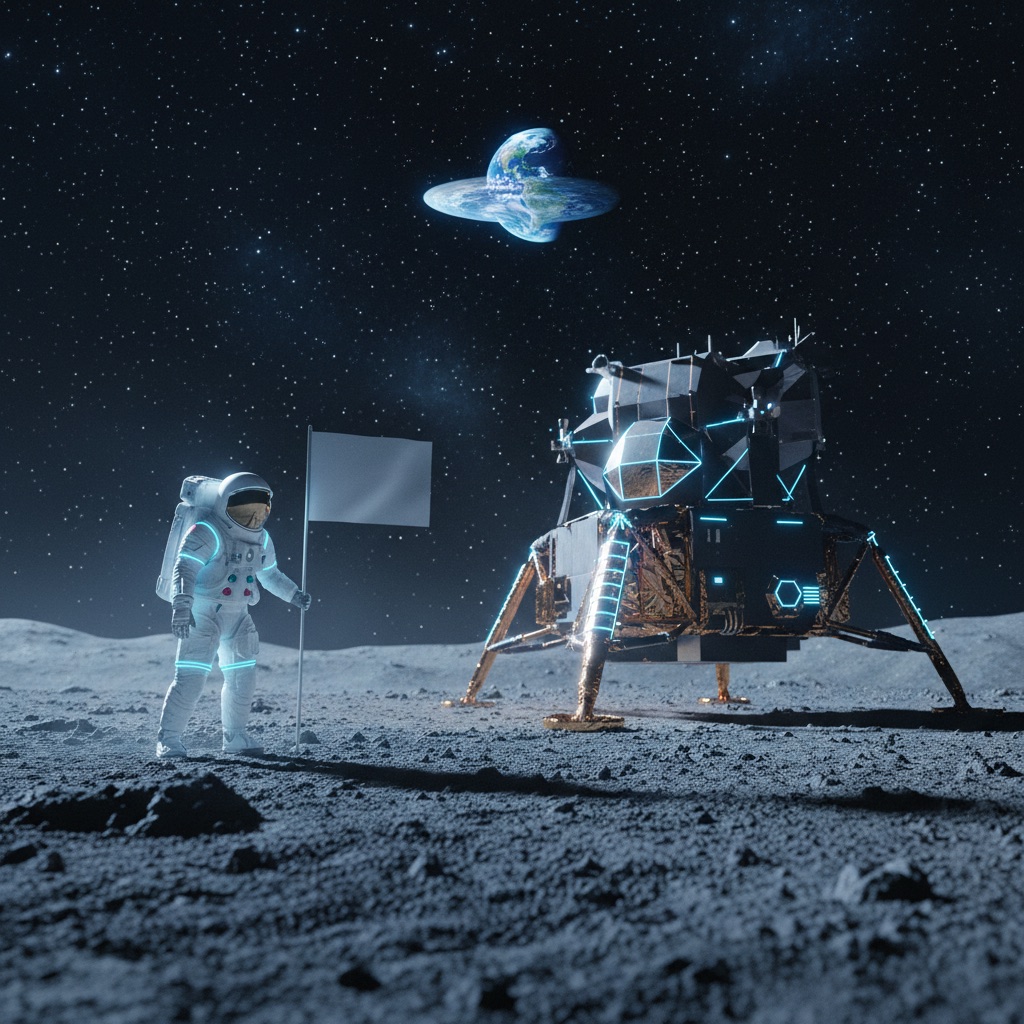

Astronaut on the Moon beside a lunar lander, Earth in the sky
1969 — we walked on another world.
A rocket launching into a starry night sky
We built machines to leave the planet.

And then something broke. You can argue about the cause — the end of Bretton Woods in 1971, the oil shocks, globalisation, the end of cheap energy — but you cannot argue about the shape. For twenty-five years, what workers produced and what workers were paid rose together, almost perfectly. In the 1970s the two lines separated, and they never came back together.

Productivity vs. the typical worker’s pay — U.S.1948 → 2023
300200100 1948197320002023 the break Productivity Typical worker’s pay

Indexed to 100 in 1948. Source: Economic Policy Institute productivity–pay tracker. The shaded area is the gap that never closed.

The lines used to move together.

From 1948 to 1973, output per hour and the pay of a typical worker both roughly doubled. Build more, earn more. That was the deal, and it held for a generation.

Since then productivity has more than tripled. Pay has barely moved. The shaded area is the part of what we built that stopped reaching the people who built it.

The same decade shows the same fracture almost everywhere you look: nuclear plants stopped getting finished, aircraft stopped getting faster, infrastructure cost per kilometre began climbing and never stopped. Whatever happened in the 1970s, it did not happen to one industry.

It wasn’t just wages. The same decade broke almost everything.

Nuclear reactors started — U.S.

40019552020 1973

41 reactors started in 1973. The last U.S. order was placed in 1978. Then, for forty years, essentially none.

Fastest passenger aircraft — mph

1400019302024 2003

Concorde flew at 1,350 mph in 1976. It was retired in 2003, and we went back to the speed of a 1958 Boeing 707. Travel got slower.

U.S. interstate cost per mile — $M, 2016 dollars

$60M019602000 1970

Building the same mile of road got roughly five times more expensive — without getting five times better.

Total factor productivity, U.S. — and the trend we lost

1.41.00.6195419732023 1973 the trend we lost actual

Real data, 70 years of it. Productivity grew 1.09% a year from 1954 to 1973, then 0.48% for the fifty years since — less than half. Had the old pace held, we would be 36% richer in productive capacity than we are. The shaded wedge is 28 years of progress that never happened.

Sources: U.S. Energy Information Administration (reactor construction starts); manufacturer cruise-speed specifications; Brooks & Liscow, Infrastructure Costs (2023); and Penn World Table via FRED series RTFPNAUSA632NRUG (total factor productivity, 1954–2023) — downloaded and computed directly, not quoted. Break dates are the conventional ones and are debated — the shapes are not.

Then, quietly, it financialized. Ambition migrated from the launchpad to the spreadsheet, and a growing share of the entire economy went to simply moving money around. You can watch the moment it took over:

Share of U.S. GDP — the financial industry1860 → 2007
8%6%4%2% 1860190019502000

Source: Philippon (2008). The economy tilted from building things to pricing them.

Money replaces honour and adventure as the objective of the best young men… The object of the young and the ambitious is no longer fame, honour or service, but cash. No longer do schools aim at producing brave patriots ready to serve their country — parents and students alike seek the qualifications which command the highest salaries. — Sir John Glubb, The Fate of Empires

And so, one percent at a time, we stopped building things.

This is absolutely insane Who allowed this to happen?
An adult asks a child what they want to be; the child, in a paper astronaut helmet, imagines stock charts and dollar signs
“What do you want to be when you grow up?” — “An astronaut… but realistically, finance.”

We refuse this. Antbuilder is a revolt — against a world that stopped building, and against the corruption hollowing out our institutions. The answer isn't nostalgia. It's to build again.

The Pyramid

We build in rising order of difficulty.

Each tier rests on the one below it. We start at the wide base and build toward the summit.

04

A country — Wissenland

The summit. Acquire the land, charter the institutions, build a land of knowledge.

03

Coordinate people & capital

A fund and institutions that point real talent and real money at real problems — and see them through.

02

Hardware

Physical products. Slower, more expensive, harder to fake — and far harder for others to copy.

01

Software

Apps and AI tools, shipped to real users across 85+ countries. The training ground — where we learn to finish and to sell.

The ambition

We are underwriting for unicorns — plural.

Venture returns follow a power law: one outcome pays for everything else. So we don't place one bet. We run a portfolio, build it in-house, and hold every venture to a billion-dollar ceiling.

LebenmasterWhat a $1B outcome looks like10 million people running their life on it
HotcheckWhat a $1B outcome looks likeA consumer brand at internet scale
Tromen PeakWhat a $1B outcome looks likeThe studio that automates the LatAm mid-market
TechnietoWhat a $1B outcome looks likeThe marketplace every family uses when a parent needs help
Reflecta.artWhat a $1B outcome looks likeA native art house with global distribution
Austral AnchorWhat a $1B outcome looks likeA fund that prices what others cannot
GegenlabsWhat a $1B outcome looks likeDiscoveries that belong to everyone
AlimentaWhat a $1B outcome looks likeThe company that ended home cooking
Proyecto AuroraWhat a $1B outcome looks likePersonalised cancer vaccines, made in Argentina
WissenlandWhat a $1B outcome looks likeNot for sale. This one is the point.

We don't need ten winners.

We need one. And we have ten shots, one operator who ships daily, a burn most startups spend on catering, and a structure where every venture makes the next one cheaper to build. Nothing here is a slide — five of them already take money from real people in 85+ countries.

Portfolio target 3+ billion-dollar companies, built in-house, by 2035
Two ways in

Back the engine, or back one venture.

No single investor has to believe in all ten. The studio raises operating capital; each venture raises its own round from its own specialists.

Layer 1

Back the studio

You're underwriting the creation engine and its hit rate — not one product. Capital converts directly into operators, and each operator is another venture running in parallel.

Raising$500k – $2M
  • 4 operators × 24 months$192k
  • Founder salary, 24 months$108k
  • Venture launch budget (×6)$120k
  • Infra, legal, buffer$80k

At $4,600 per launch, $500k funds six new ventures and four operators for two years — while the five live ones keep running.

Fit: family offices, permanent capital, operators who've built studios.

Layer 2

Back Proyecto Aurora

Personalised neoantigen cancer vaccines, manufactured in Argentina. Merck/Moderna's Phase 3 read out positive in melanoma on 19 August 2026 — the science is now de-risked. The open problem is cost: ~$45k per patient, and manufacturing is the stated bottleneck.

Raising$500k – $2M
  • Co-founder scientist + 2 researchers$220k
  • CRO preclinical validation$80k
  • IP & patent filings$40k
  • Compute for selection models$30k

Swiss-standard science on an Argentine cost base. If GMP lands at a third of Basel's cost, the same trial budget treats 3× the patients.

Fit: biotech specialists, cancer foundations, mission capital, families touched by melanoma.

What each venture needs, and the arithmetic behind it

Hotcheck$150k
hotcheckai.com

Organic distribution is solved. Monetisation is not — yet.

  • Thousands of organic sessions a month, zero ad spend
  • Repeat viral reach · strong upload & share rates

Where it goes: most of it buys reach — creator-led UGC in the US and LatAm, the channel that already sends us traffic for free. A first slice funds offer testing against the audience we have, and the ad budget stays locked until checkout clears our conversion threshold. We scale a working funnel or we don't scale at all. Full funnel data shared under NDA.

Lebenmaster$80k
lebenmaster.com

Live on the App Store. Subscription mechanics already built.

  • $8.99–$16.99/mo · semestral $60
  • Shield blocking, goals, BrainLevels shipped

The math: at $12/mo and 6-month average retention, LTV is $72. That makes any channel with CAC under $24 profitable at 3×. $80k funds ASO, creator seeding and retention work to find one such channel.

Tromen Peak$0
tromenpeak.com

Self-funding. This is the studio's operating floor.

  • Fractional automation advisory
  • Ex-Google engineer, five shipped products

The math: 3 clients × 8h/week × $200/hr = $6,400/mo. Tromen Peak alone covers the studio’s running costs — it needs no capital, only calendar.

Technieto$60k
technieto.com

A marketplace where young people get paid to help older people with technology.

  • Two-sided: students earn, adults 50+ finally get help
  • Patient, human, in-person or remote — not a chatbot maze

Where it goes: marketplaces are won by solving one side first. The budget buys supply — recruiting and vetting young helpers in one city — then demand through the channel older families actually trust: their own children. One operator, one city, one repeatable playbook before we open a second.

Alimenta$300k
alimenta ↗

One kitchen per city. Every meal you eat, built to your macros, for a flat monthly price.

  • We produce everything — no marketplace, no restaurant margin
  • Subscription first, so we know demand before we cook it

Where it goes: the sector's graveyard died of one thing — cooking to guess demand, and throwing away 16% of everything made. A subscription cuts that to ~2%, which in this business is the entire margin. The budget buys a founding cohort in one city through contracted kitchen capacity, not capex. Own facility only after retention proves out. Autonomous delivery at ~$1 a trip is what eventually makes daily fresh food cheaper than cooking it yourself.

Austral Anchor$500k

A hedge fund built on one thesis the West keeps mispricing: China's growth is not over.

  • Consensus reads decoupling; the manufacturing, energy and industrial data say otherwise
  • Rigour over narrative — positions sized to what the numbers support

Where it goes: anchor capital to open the book and build a track record — data, execution, compliance and the first audited years. Mispricings this large only exist while the story is unpopular, which is exactly the window. Strategy memo on request.

Proyecto Aurora$500k+

Personalised neoantigen cancer vaccines, designed and manufactured in Argentina.

  • Merck/Moderna hit their Phase 3 endpoint in melanoma, 19 Aug 2026 — the science is no longer the risk
  • The open problem is cost: ~$45k per patient, and manufacturing is the stated bottleneck

Where it goes: $220k to a co-founder scientist and two researchers; $80k to contracted preclinical validation — we rent the wet lab rather than build one; $40k to patent the selection method before publishing; $30k to compute. No facility, no capex, no permits until the data exists. Swiss-standard science on an Argentine cost base — if GMP lands at a third of Basel’s cost, the same trial budget treats three times the patients.

WissenlandNot raising yet

Every country is badly run. We would like to build one that isn't.

  • Acquire land, charter the institutions, run them on things that actually work
  • A land of knowledge — governed by evidence rather than inheritance

Where it goes: nowhere, yet. This is the summit of the pyramid and it is funded by everything below it. We name it here because it is the honest reason the rest exists — and because the people we want beside us are the ones who read this and lean in rather than laugh.

What the capital is for

The hard part is done. Five products are live in 85+ countries, the funnels are built end to end, and thousands of people arrive every week through channels that cost us nothing. What we have never had is the budget to finish the job.

Monetisation is a tuning problem: offer testing at volume, pricing ladders, and paid reach large enough to read a clean signal. Those are the three things money buys and effort cannot. Every ad budget on this page is staged behind a conversion threshold — we scale what proves out, and we cut what doesn't. Give us the reach and we will finish the funnel.

Opening our first outside allocation

Get in before the compounding does.

Five live products in 85+ countries, built for $4,600 apiece by one person. That was the hard part and it is already done. What capital buys now is operators — and every operator is another venture running in parallel. Back the engine, or back the single venture you care about most.

StageFirst outside round
You backThe engine, or one venture
AllocationDeliberately small

We spent this year proving we can build in the world of bits — five products, 85+ countries, eight launches on twenty-three thousand dollars. We are done with bits. Software was the training ground; it taught us to finish, to sell, and to move fast on almost nothing. The capital we are raising goes into the world of atoms — kitchens, robots, laboratories, land. That is where the problems that actually matter still sit unsolved, and it is the only part of the world that stopped getting better.

Deck & numbers on request — hello@antbuilder.com. We reply the same day.